Wide-Angle vs Telephoto Lenses for Harbor and Port Photography
The first time you stand on a commercial quay with a camera, the harbour seems to demand a wide lens. There is so much of it: the cranes, the sheds, the ranks of containers, the trawler tied three deep. So you raise the widest thing in your bag and start shooting. An hour later you have forty frames in which everything is present and nothing is legible. Fifty metres down the pier, another photographer is picking the orange of a fisherman's oilskin out of a wall of stacked steel with a long lens, and the picture reads instantly. Same port, same light, two completely different arguments about what a harbour is.
What a Focal Length Actually Changes
Forget the numbers for a moment and think about distance. A wide lens pushes the world away: objects shrink, gaps widen, the near edge of the frame swells and the far end collapses into a thin band. A telephoto does the opposite. It pulls the distance in, stacks layers on top of each other and makes separate things look related. That single difference explains almost every practical decision you will make on a quay.
Most of the guidance below assumes a full-frame body, but the thinking transfers. On a crop sensor, a 16–35mm behaves like a 24–50mm, which is why so many photographers working harbours end up with something in the 10–20mm range for the wide end and 70–200mm as their long workhorse.
Wide-Angle: The Dock at Arm's Length
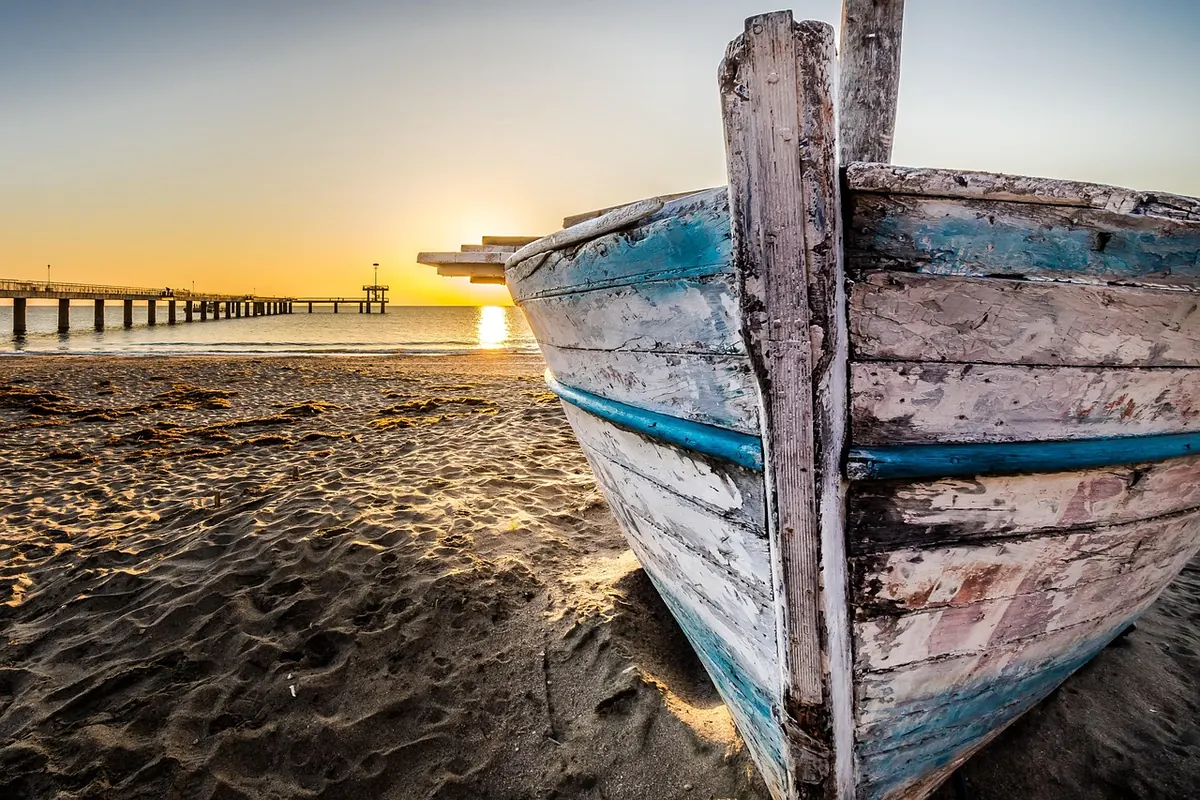
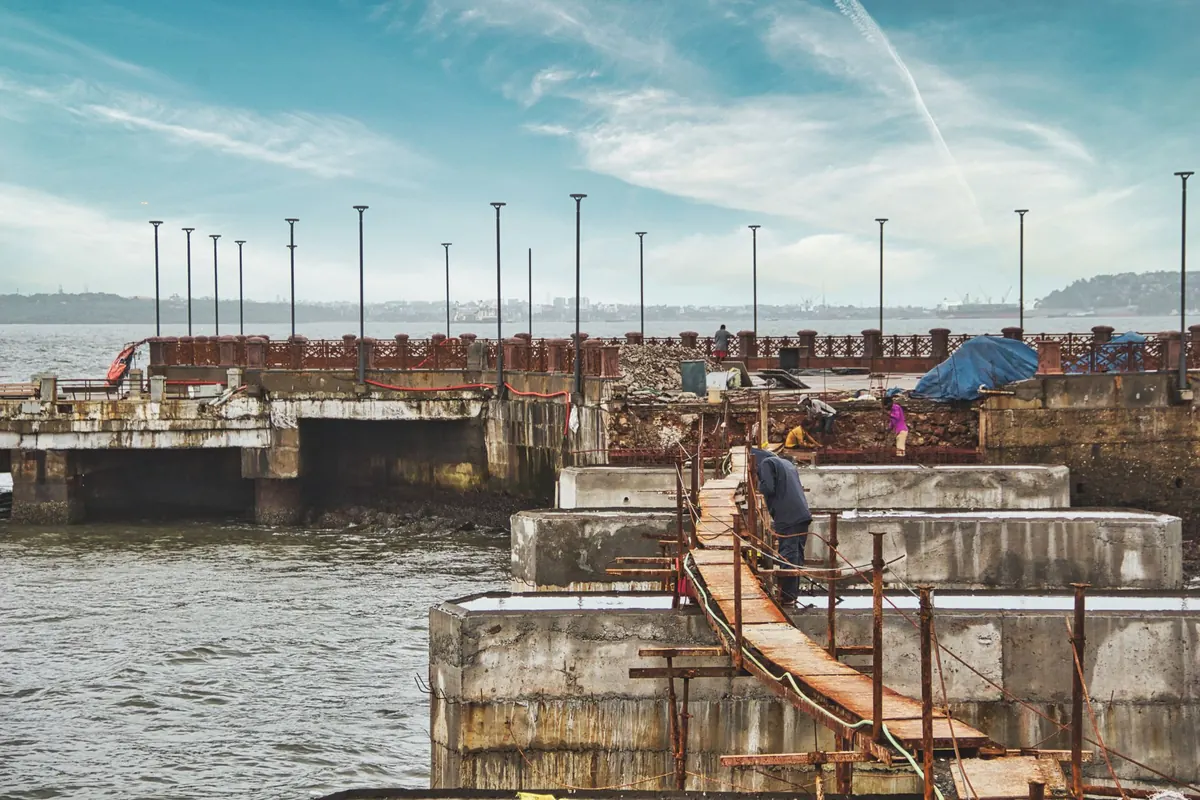
The wide lens earns its place when you cannot step back. Quaysides are narrow, fenced, full of machinery and often legally off-limits beyond a certain line. A 16mm or 20mm lets you stand with your back against a bollard and still get the whole wheelhouse, the ladder, the warped deck and the sky above it into one frame.
The mistake nearly everyone makes is using width as a substitute for a subject. A wide frame with nothing in the foreground is just a lot of grey water. Get low, get close to something concrete — a wet mooring ring, a coil of rope, a puddle holding a reflection of the crane — and let the rest of the harbour arrange itself behind it. Keep the camera level and your verticals will stay vertical; tilt up and the sheds lean like they are falling over. Stop down to f/8 or f/11 so the foreground and the middle distance both hold, and accept that the last few metres of water may never be sharp.
Where the wide lens genuinely wins:
- Tight quays and piers where there is no room to back up.
- Interiors — wheelhouses, engine rooms, fish holds, the inside of a shed.
- Reflections and wet ground, which give you a second harbour under your feet.
- Weather: a squall line coming over open water needs room to breathe.
- Harbour mouths and breakwaters, where rocks or a beacon can anchor the foreground.
Where Wide Lenses Struggle
Crowded ports are the weak spot. Wide lenses are honest to a fault: they include the skip, the parked van, the plastic fencing, the tourist in the yellow jacket. Everything is recorded, nothing is emphasised. Objects near the corners stretch and bend, so boats grow strange curves at the edges of the frame and a hull that was beautiful in life looks like a bathtub. You can crop later, but a heavy crop of a 16mm frame leaves you with a soft, pixelated centre and a lot of wasted glass.
Telephoto: Compression, Layers and Detail
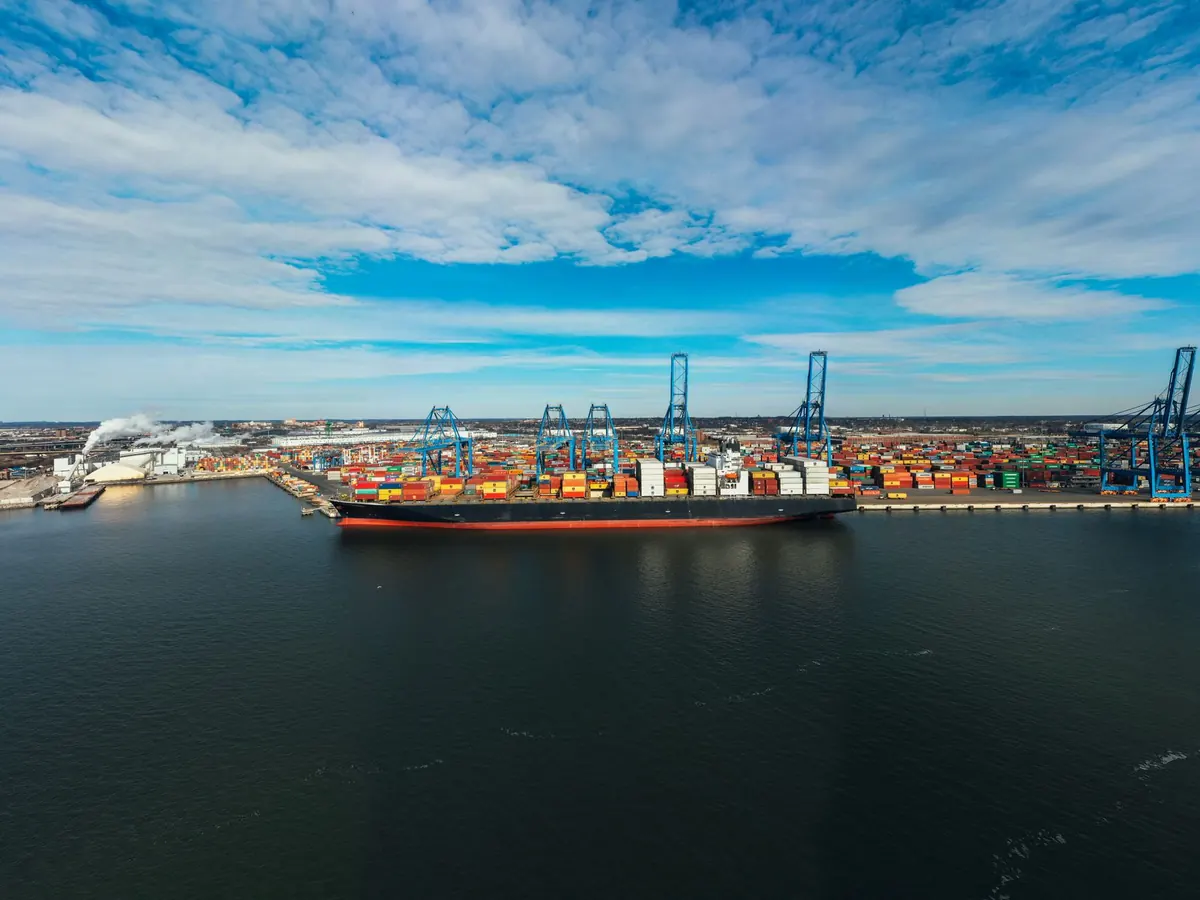
A long lens is where harbour photography gets interesting. Stand at the far end of a pier with a 70–200mm and the port reorganises itself into planes. The trawler sits in front of the container stacks; the stacks sit in front of the gantry cranes; the cranes sit in front of the cloud bank. That stacking is not a trick of the lens so much as a consequence of standing back and narrowing your view, but the effect is real and it is the reason long lenses suit working ports so well.
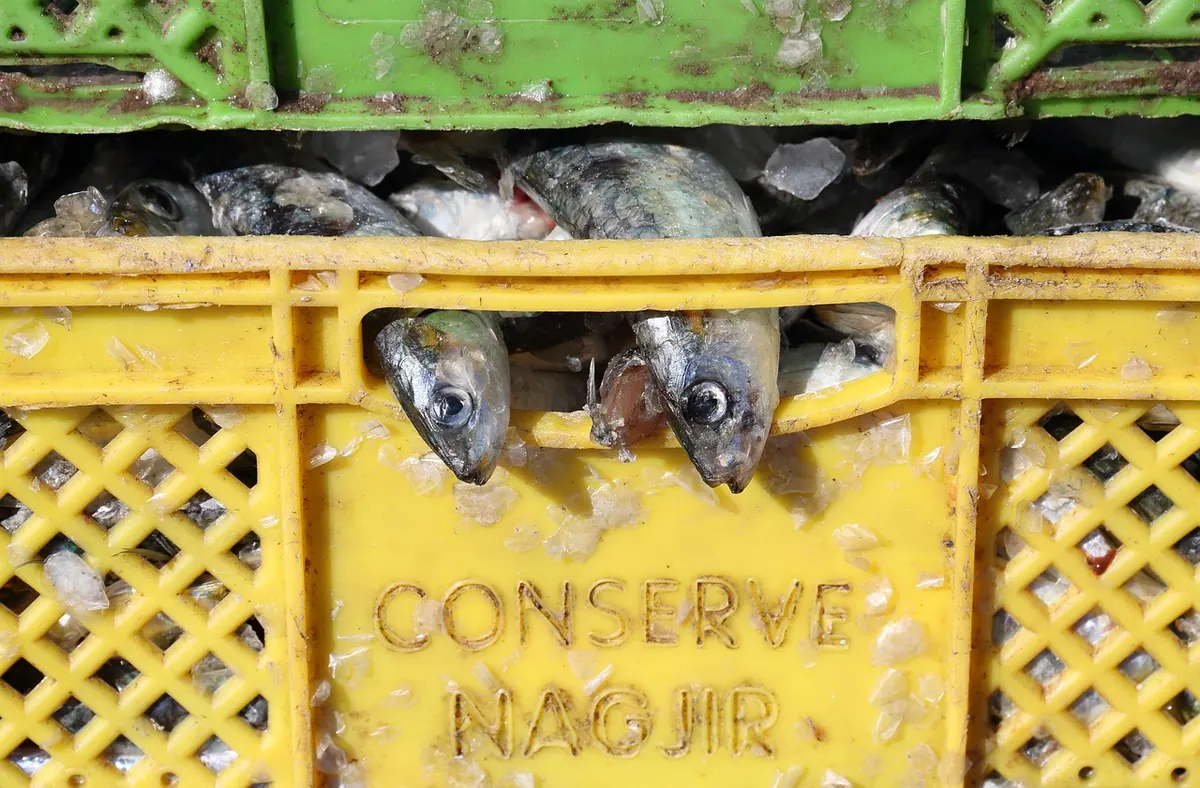
Telephotos also let you photograph people without getting in the way. A deckhand coiling line two berths over, a pilot stepping off a ladder, a welder's spark falling through a hatch: all of these are better made from a distance, both for the picture and for the simple courtesy of not being underfoot. Ships are workplaces, and a photographer who respects that gets invited back.
Two practical cautions. First, atmosphere. Long lenses magnify heat haze, spray and diesel shimmer, so a 400mm shot across a sun-warmed harbour at two in the afternoon can look like it was taken through a chip shop window. Early morning and late afternoon, when the air is cooler and the light is lower, are worth the alarm clock. Second, stability. A 300mm on a bobbing boat is close to unmanageable; brace against a rail, use a monopod where you can, and raise your shutter speed before you raise your ISO. If you are hand-holding, keep your elbows in and shoot in short bursts rather than long ones.
Handling a Crowded Port Scene
Cluttered harbours are where the two lenses make genuinely different pictures of the same place. Wide gives you the honest, muddled, documentary view — the port as it smells and sounds, with all its mess. Telephoto gives you the edited view, in which clutter is compressed into texture and one clean subject carries the frame.
A wide lens shows you the harbour. A long lens shows you what the harbour is doing.
When a scene is too busy, try this order of work:
- Find height. A footbridge, a car park roof, a public hill above the docks will separate boats from background better than any lens.
- Choose one subject and rank everything else. If the ferry is the subject, the containers behind it are texture, not content.
- Move before you zoom. Walking thirty metres left often fixes a composition that zooming cannot.
- Try the long lens from across the water. Distance compresses, and compression tidies.
- Only then go wide, and find the foreground element that makes the width worthwhile.
Carrying Both, and Knowing When to Switch
Two bodies is the comfortable answer and the expensive one. A workable compromise is one wide zoom and one long zoom — say 16–35mm and 70–200mm — with a 1.4x converter for the days when the harbour entrance is busy. Change lenses with your back to the wind, away from spray, and keep a cloth and a plastic bag in the pocket where you can reach them one-handed. Salt is patient.
A useful habit is to shoot the place before you shoot the details. Arrive, walk the quay with the wide lens, record the geography, the light and the weather. Then stop, look at what is actually happening, and switch to the long lens for the picture you came for. Trying to do both at once usually means doing neither properly.
Choosing at the Gate
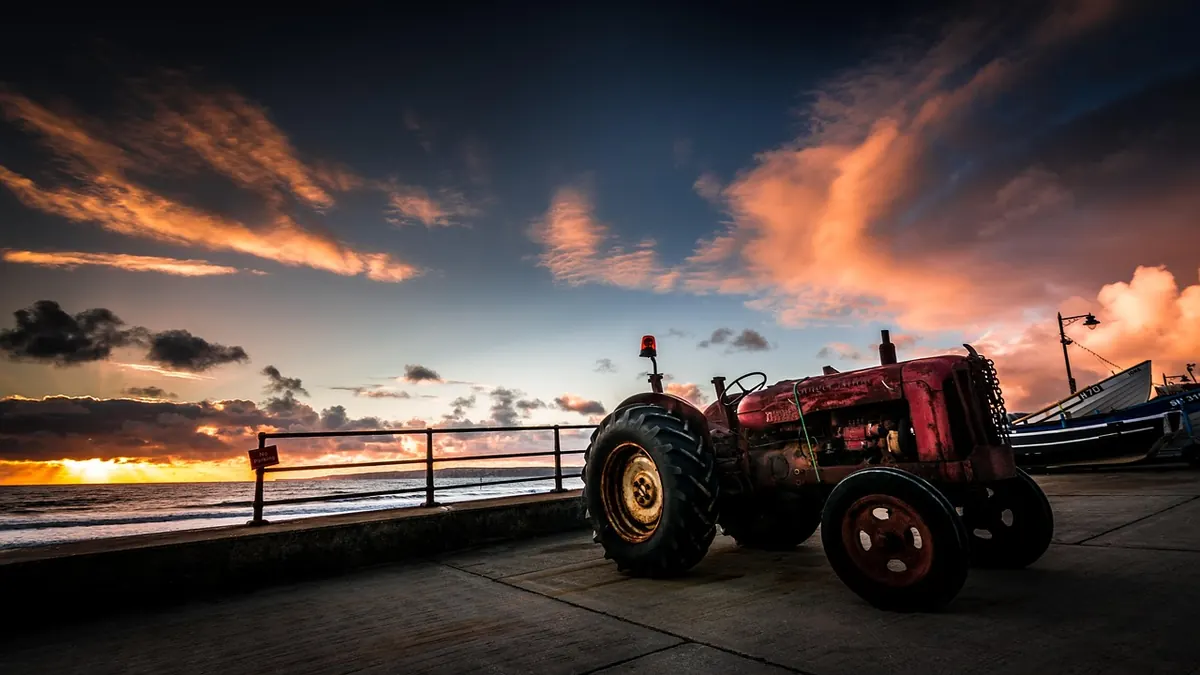
If you only have one lens with you, let the day decide. Flat grey light and a busy quay: take the long lens, because compression will give you shape where the light gives you none. Dramatic sky, wet ground, a boat you can walk right up to: take the wide, get low, and put something in the foreground.
And check before you shoot. Ports are working environments with security rules, restricted areas and people whose safety depends on you not being where you are standing. Ask at the harbour office, stay behind the lines, don't block ladders or gangways, and never let a picture cost someone a shift. The best harbour photographs tend to come from people the port has decided to tolerate.
Photo: Joshua_Willson / Pixabay